
Eternally Native
August 2026
Share the story:


.png)
Rescued Rosie enjoys flight once again!
Rosie, the little Boobook owl was found weak, grounded and unable to fly in a residential backyard in Penrose. She had suspected rodenticide poisoning.
WIRES receives hundreds of calls a year for native animals suffering the effects of rodenticide poisoning. Native animals like owls and tawny frogmouths are particularly susceptible because they often find and eat the poisoned rats. Most don’t make it – but thankfully Rosie has.
Our Responder Kimberley quickly transported the very sick owl in our Wildlife Ambulance to Southern Highlands Veterinary Hospital, where blood tests revealed a critically low PCV of just 14%, along with delayed clotting times – all clinical signs consistent with suspected rodenticide poisoning.
Under the guidance of Dr Charlie Carter, Rosie commenced intensive treatment, including vitamin K therapy.
Despite the severity of her condition, she responded well to treatment and was soon able to move from our ICU at Mullyang to one of our temperature-controlled treatment rooms. These enclosures give recovering raptors a little more room to move, and include access to an outside aviary for when they are ready.
After she completed her course of medication, Rosie spent several weeks building up her health and strength.
Every flight enclosure at Mullyang has recorded video surveillance, 24/7. This is extremely important because it means Kimberley can check the progress of each patient’s recovery throughout the day and night, which is often an owl’s most active time.
.png?width=746&height=435&name=Blog%20page%20image%20-%20750x438px%20(1).png)
Above: Some of the avaries at Mullyang can be interconnected to create larger spaces.
When Kimberely was confident Rosie had the strength and stamina to fly, she transported the little Boobook back to Dr Carter for a final health check and then on to her home territory, where she was released on a clear winter’s evening.
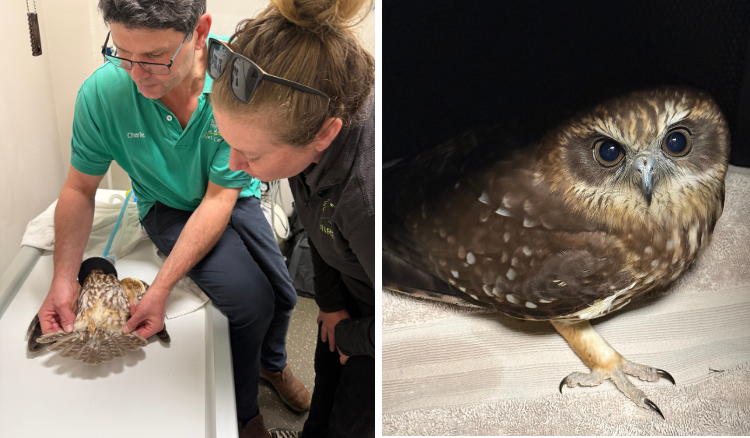
Above: Rosie receiving a medical check from Dr Carter, who needed to make sure she was fully ready for her release.
Thank you so much for being one of Rosie’s protectors. She’s back in the wild today – because people like you made sure she had the specialist care she urgently needed!
Stay in touch and get our regular rescue stories, WIRES updates and a free copy of our 15 Ways to Help Wildlife ebook
August 2026
August 2026
August 2026
August 2026
February 2026
February 2026
February 2026