
Giving Day 2026
September 2026
For emergency rescue support 24/7 please call 1300 094 737
Share the story:


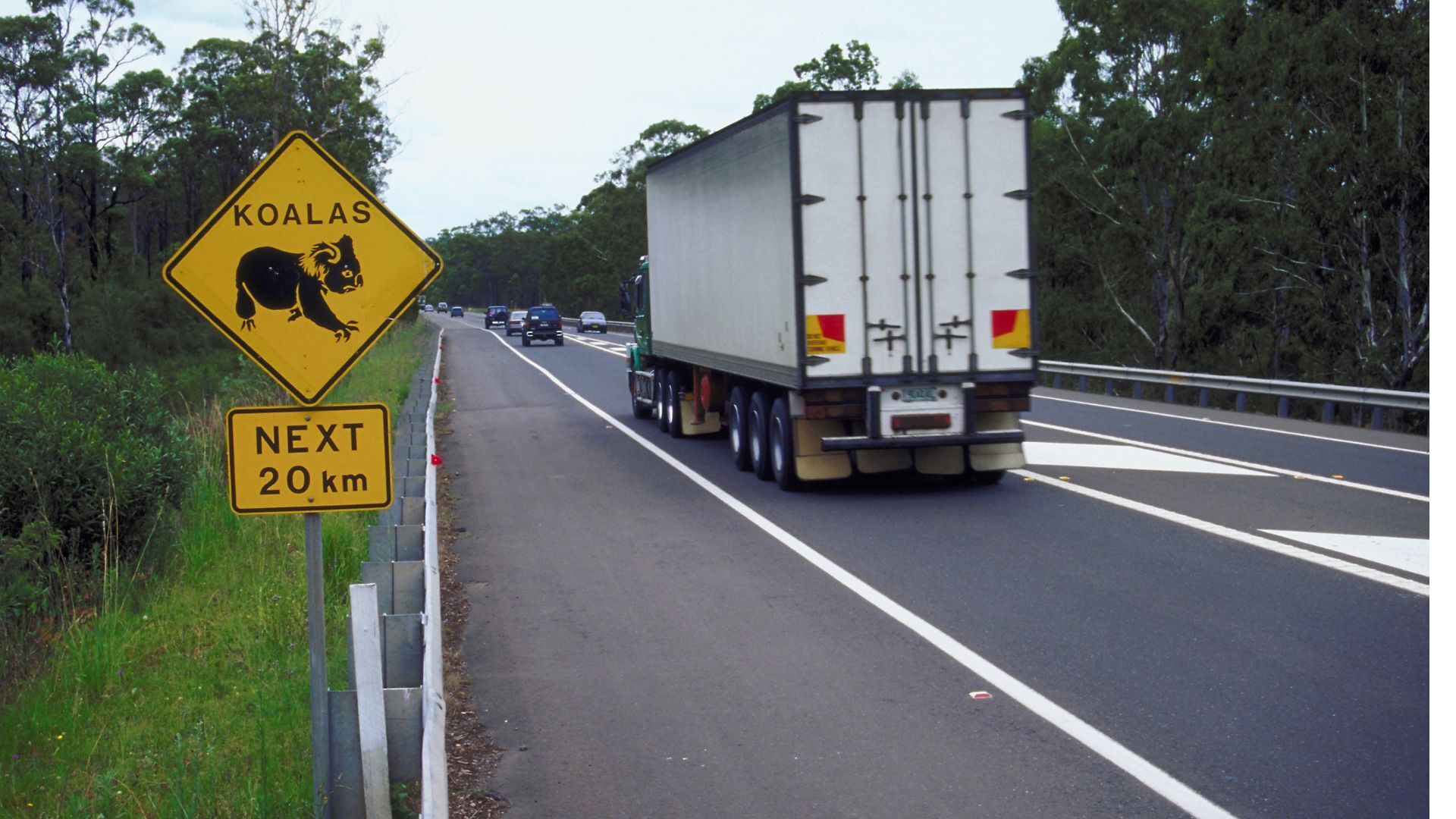
The Crisis: Sydney’s Koala Corridors Are Disappearing Fast
Across Greater Sydney, habitat fragmentation is accelerating. Development pressures are severing key bushland linkages, reducing koalas’ ability to move across their natural range. Without these movement pathways, koalas become trapped in shrinking habitat pockets. They are vulnerable to road strikes as they move around in search of food, habitats and mates. Over time, disconnected populations are subjected to additional threats, are more vulnerable to disease, being killed on roads, and struggle to recover from fires, drought and heatwaves.
The Sydney Basin Koala Network (SBKN) — created by WIRES and the Total Environment Centre — has been documenting this decline through detailed mapping and community-led research. The findings are clear: koala habitat across the basin is shrinking, and some of the most important movement corridors are on the brink of collapse.
In July this year, Planning Minister Paul Scully said proposed changes to the Cumberland Plain Conservation Plan (CPCP) aimed to balance conservation with urban development, supporting the delivery of 73,000 new homes. However, conservationists warn the amendments still allow the most direct connection between the Georges and Nepean Rivers — the key Mallaty Creek link — to be severed. SBKN’s Stephanie Carrick says developers are already seeking to modify existing proposals in ways that would encroach into more than 50 hectares of identified conservation land, further weakening already fragile koala habitat.
Introducing the Greater Sydney Koala Green Belts: Corridors of Survival
For the first time, koala habitat corridors across Greater Sydney have been comprehensively mapped, this is a critical first step towards protecting the region’s most important koala populations.
Produced by SBKN and funded by WIRES, the newly released Greater Sydney Koala Corridor Map identifies both existing and potential habitat connections across the region — stretching from the Central Coast to the Blue Mountains, Western Sydney and the Illawarra.
This work represents a major step forward in securing long-term protections for koalas.
Jeff Angel, Director of the Total Environment Centre, states that:
“The future of several thousand koalas is at stake. It’s urgent the corridors are protected before being lost and fragmented to development and land clearing.”
These corridors — developed using the NSW Chief Scientist’s recommended widths of 390–425m — also act as natural buffers for the city. They cool urban areas, increase climate resilience and protect biodiversity across a rapidly growing metropolitan region.
Stephanie Carrick, from SBKN, highlights why this mapping is essential today:
“These corridors are especially important where increased development is slated in areas such as Penrith, the Hills District, Hornsby, Canterbury-Bankstown, Liverpool, Sutherland Shire, Campbelltown and Appin. The corridors will allow koalas to move throughout the landscape, connecting to National Parks and green spaces.”
The Greater Sydney Koala Corridor Map
This new map is one of the most valuable conservation tools now available to the community. It:
The link to the map is here Greater Sydney Corridor Mapping - Sydney Basin Koala Network
This tool is now being used by a network of 24 conservation groups to hold both developers and government to account — ensuring that when proposals interfere with vital corridors, the community has the data needed to push back.
The Importance Of Connected Habitat
The protection and enhancement of habitat connectivity is critical to ensure koalas can survive and thrive in South-western Sydney, and to reverse population decline of this listed endangered species, a decline towards extinction. This is neither a new nor contested idea — as evident in the NSW Department of Planning’s Circular number B35, issued in March 1995 — titled State Environmental Planning Policy No 44 – Koala Habitat Protection, which stated that:
“The presently known geographic distribution of the koala in NSW is fragmented and most of the populations appear to be small and isolated. Many also occur where they are increasingly susceptible to habitat loss or modification, predation, exposure to drought and bushfire.”
It is important to note that this government circular was published 30 years ago.
Reducing habitat fragmentation and increasing connectivity is critical. The recently published Koalas in the Landscape report outlined that there was only 29% of koala habitat (landscape capacity) remaining in NSW in 2020 (based on a 1750/pre-industrial baseline). By 2030, the remaining NSW habitat — without intervention and active enhancement (i.e. active restoration) — will decline further to 18%. By 2070, it is estimated that only 13% will remain.
With urgent government intervention (i.e. enhancement and restoration of habitat) — as called for in Finding 2 of the Koala populations and habitat in New South Wales report — koala habitat could increase to 34% and 39%, respectively, of what was here prior to 1750.
It is also critically important to note that the Koalas in the Landscape report only considered habitat impacts and loss due to climate change — excluding (additional) deforestation, habitat destruction and fragmentation.
Why Koala Corridors Matter
The NSW Government has taken steps to expand protected areas and fund new wildlife crossings. While these commitments are welcome, conservationists warn they are not enough to counteract the rapid pace of development.
Delays in constructing wildlife crossings, gaps in east–west corridor protection, and ongoing fragmentation from urban growth mean koalas remain at risk.
Only legally protected habitat corridors — such as those proposed under the Greater Sydney Koala Green Belts plan — can offer long-term security.
The Environmental Defenders Office has now provided legislative pathways to embed these corridors across planning systems, ensuring they can be protected in perpetuity.
A Future Where Koalas ThriveSydney's koalas are facing one of the most critical moments in their history. But with science-backed planning, community action, and strong advocacy, it is still possible to secure a healthy future for them.
Protecting habitat corridors is the most powerful step we can take right now — for koalas, for biodiversity, and for a more climate-resilient city.
Together, we can ensure that koalas continue to move, survive and thrive across Greater Sydney for generations to come.
Resources:
Crucial koala corridors are dwindling in Sydney's south-west, conservationists warn - ABC News
Greater Sydney Corridor Report
DCCEEW (2024) Koalas in the Landscape. Landscape capacity to support koala populations through climate change — a technical report, Department of Climate Change, Energy, the Environment and Water In partnership with University of New England, Macquarie University.
Stay in touch and get our regular rescue stories, WIRES updates and a free copy of our 15 Ways to Help Wildlife ebook
September 2026
September 2026
September 2026
August 2026