
• 1300 094 737
  • info@wires.org.au

For emergency rescue support 24/7 please call 1300 094 737

logo-1
  • Support Us

      Support Wildlife

      • Donate to WIRES
      • Other Ways to Give
      • Fundraise for Wildlife
      • Support WIRES branches
      • Leave a Bequest

      Corporate Partners & Supporters 

      • WIRES Partners
      • Partner with WIRES
      • Workplace Giving
      • Corporate Workshops
  • Get Involved

      Support Wildlife

      • Education & Training
      • Get Involved

      National Wildlife Network

      • National Training
      • National Wildlife Network
  • What We Do

      Rescue & Rehabilitation

      • Wildlife Rescue
      • Emergency Response
      • Wildlife Centres

      Work for Wildlife

      • Wildlife Programs
      • National Wildlife Network
      • Wildlife Advocacy

      Wildlife Education

      • National Wildlife Training
      • Wildlife Training Courses
      • Wildlife Information
  • Who We Are

      About WIRES

      • About Us
      • WIRES Impact
      • Work for WIRES
      • Contact Us

      WIRES Updates

      • WIRES News
      • Media Releases
      • e-Newsletter
Report a Rescue Donate

 plovers and 
 masked lapwings 

  • Home
  • Wildlife information
  • Species Information
  • Birds
  • Plovers and Masked Lapwings

If you need advice on swooping plovers, please visit Swooping Plovers 

About Plovers and Masked Lapwings

Plovers or Masked Lapwings are fairly large birds. They have long reddish legs and large yellow facial wattles. Plovers inhabit virtually the whole of Australia and are commonly found on the shores of swamps and lakes. They commonly inhabit large grassy areas, particularly those areas cleared for pasture or parkland.

Plovers usually lay their eggs after local rains. They lay up to four eggs on the ground in a small depression in open areas so they can see their predators. However, these birds have now come to accept flat roofs as a suitable nesting site, as they are generally safe from humans and predation.

The eggs will hatch in about 28 days. Plovers have spurs on their wings however despite common belief, these are not poisonous.
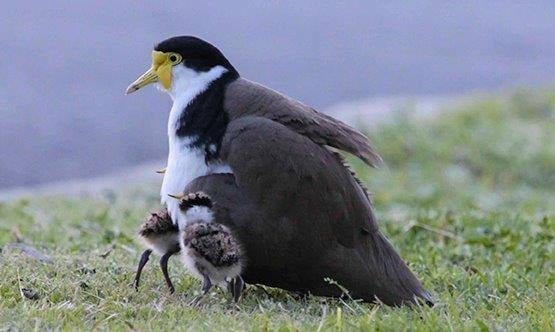
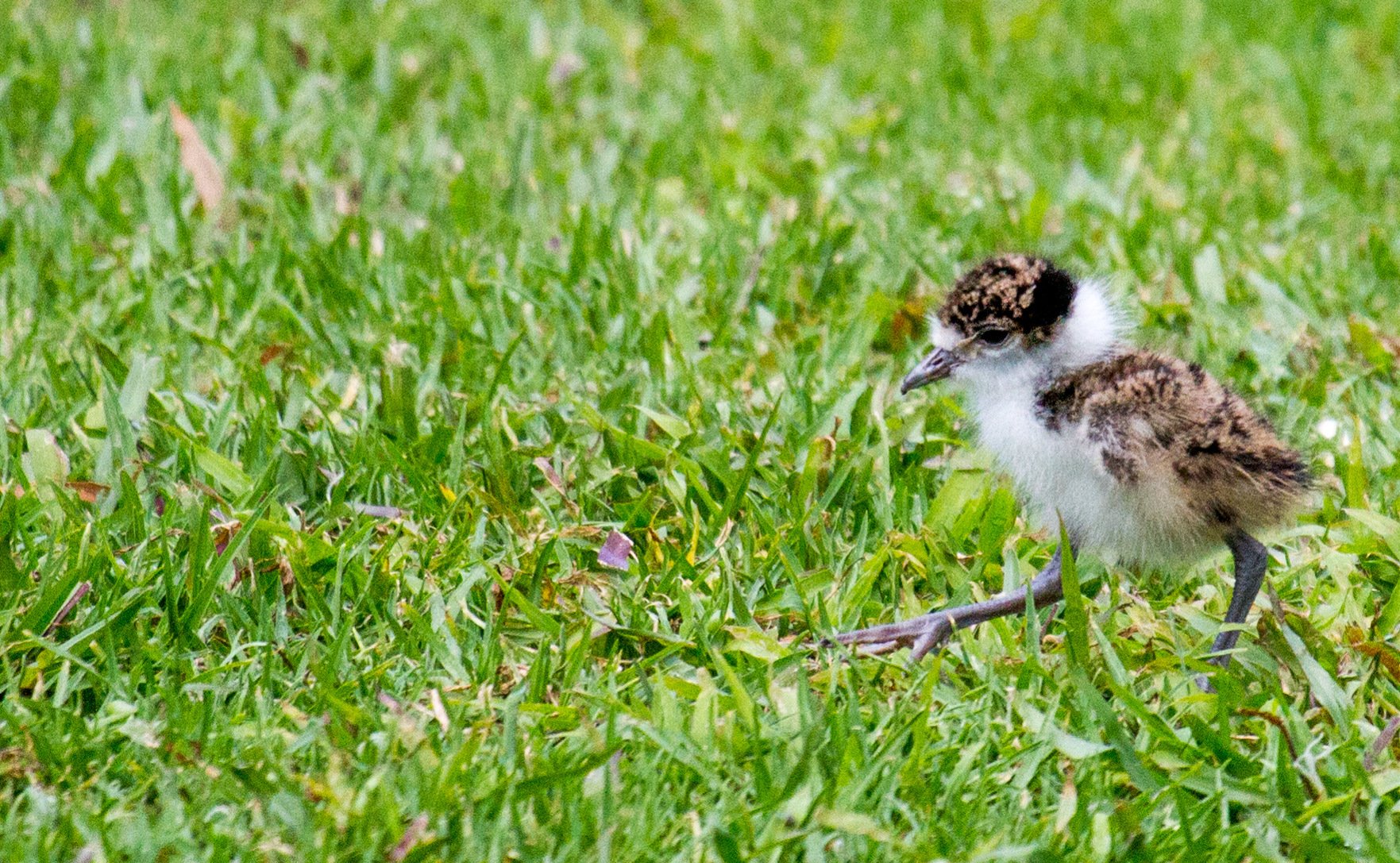
Plover-adult-and-chicks-web
_MG_4736

Leaving the nest

Unlike many other dependent bird chicks, Masked Lapwing chicks have a full covering of down and are able to leave the nest and feed themselves a few hours after hatching.

Parents provide protection, direction and warmth. In urban environments plovers may lay their eggs on roof tops for safety. In most cases, the chicks will be able to jump down safely from the roof.

This is a natural process undertaken by many bird species, including some ducks who nest in tree hollows, and the chicks are remarkably resilient to the long fall but may require assistance if the distance is too great. In some circumstances, the chicks may not be able to jump and may require assistance to reach the ground. However, interference with chicks should only occur on an absolute necessity basis.

It is possible to reunite chicks with their parents at ground level in these situations, call WIRES 1300 094 737 for advice.

Report a Rescue

For wildlife rescue assistance you must call 1300 094 737 or fill in the Report a Rescue form. All other forms of contact including Facebook are not monitored for rescues.

Button Text Here
Report a Rescue
  • Contact Us
  • Rescue
  • Resources
  • Manage Donation
  • Members Login

All gifts are tax deductible in Australia. If you're donating from the UK or USA and would like tax-deductibility, please visit our Global Giving page.

WIRES acknowledges the traditional custodians of Country throughout Australia and recognizes their ongoing connection and care of its land, water, flora and fauna. We also acknowledge the Aboriginal and Torres Strait Islander members of our WIRES community and extended network, and recognise the knowledge and wisdom embedded forever in Aboriginal and Torres Strait Islander custodianship of Country and culture. We pay respects to their Elders past and present.


WIRES Head Office: PO Box 7276 Warringah Mall NSW 2100
Phone number: 1300 094 737 | Email: info@wires.org.au
ACN 679 740 142 | ABN 30 768 872 928 | ACNC listed charity

WIRES Biodiversity Licence number: MWL000100285

  • fb-icon
  • youtube-icon
  • instagram-icon
  • linkdin
  • tiktok-icon

Need Help?

1300 094 737

WIRES operate a dedicated Wildlife Rescue Office assisting wildlife and the community 24 hours a day, 365 days a year.

Copyright © WIRES 2026 Privacy Policy