
swooping
plovers
- Home
- Wildlife Information
- Species Information
- Birds
- Plovers and Masked Lapwings
Plover swooping tips
If a plover is swooping, it can be frustrating, but the behaviour is usually temporary and has a very clear reason.
Masked Lapwings, commonly called plovers, are protective parents. During their breeding season, adult birds may swoop, call loudly or dive at people, dogs and other animals they believe are getting too close to their nest or chicks. They are defending their young, not attacking without reason.
Understanding why plovers swoop and knowing how to respond can help to keep people, pets and wildlife safe.
What to do if a plover is swooping you:
-
Stay calm
Try not to panic or run. Move calmly away from the nesting area and give the birds more space. - Avoid the area if possible
If you know where the nest or chicks are, take another route for a few weeks. This is often the simplest and safest solution for both birds and people. - Protect your head and face
If you need to pass through the nesting area, a broad-brimmed hat, bike helmet or umbrella can provide protection. - Do not antagonise the birds
Never throw objects, chase the birds. wave sticks at them or try to frighten them away. This can increase the birds' perception that you are a threat and may make the situation worse. - Keep children and pets away
Children can be particularly frightened by swooping birds. Keep children close and help them move calmly away from the nesting area. Dogs should also be kept away from nests and chicks, both for their safety and to prevent the adult birds from becoming more defensive. - If you're cycling, consider another route
A swooping bird can be particularly hazardous when someone is riding a bicycle. If you cannot avoid the area, consider dismounting and walking through it while protecting your head. - Mark the nest
If the nest site is in a vulnerable position, a protective fence/table/chair can be placed over the nest site so that the birds can come and go safely until the chicks are hatched. Four stakes and flagging tape can be used to mark the nest to alert other people of its location.
It is important to remember that plover aggression only occurs for a short period of time. Once the chicks have hatched, the level of attacks will significantly decrease.
Why do plovers swoop?
Masked Lapwings are ground-nesting birds. Their nests can be very exposed, including on grassed areas, sports fields, parks and, in urban areas, flat rooftops.
This means the adults have to actively protect their eggs and chicks from potential predators and other perceived threats.
Once the chicks hatch, adult plovers can become particularly protective. They may give loud warning calls, fly towards people or animals, swoop repeatedly or perform distraction displays to draw a perceived threat away from their young.
Swooping is a natural defence behaviour.
The birds are not being aggressive for no reason. They are responding to something they believe could pose a danger to their nest or chicks.
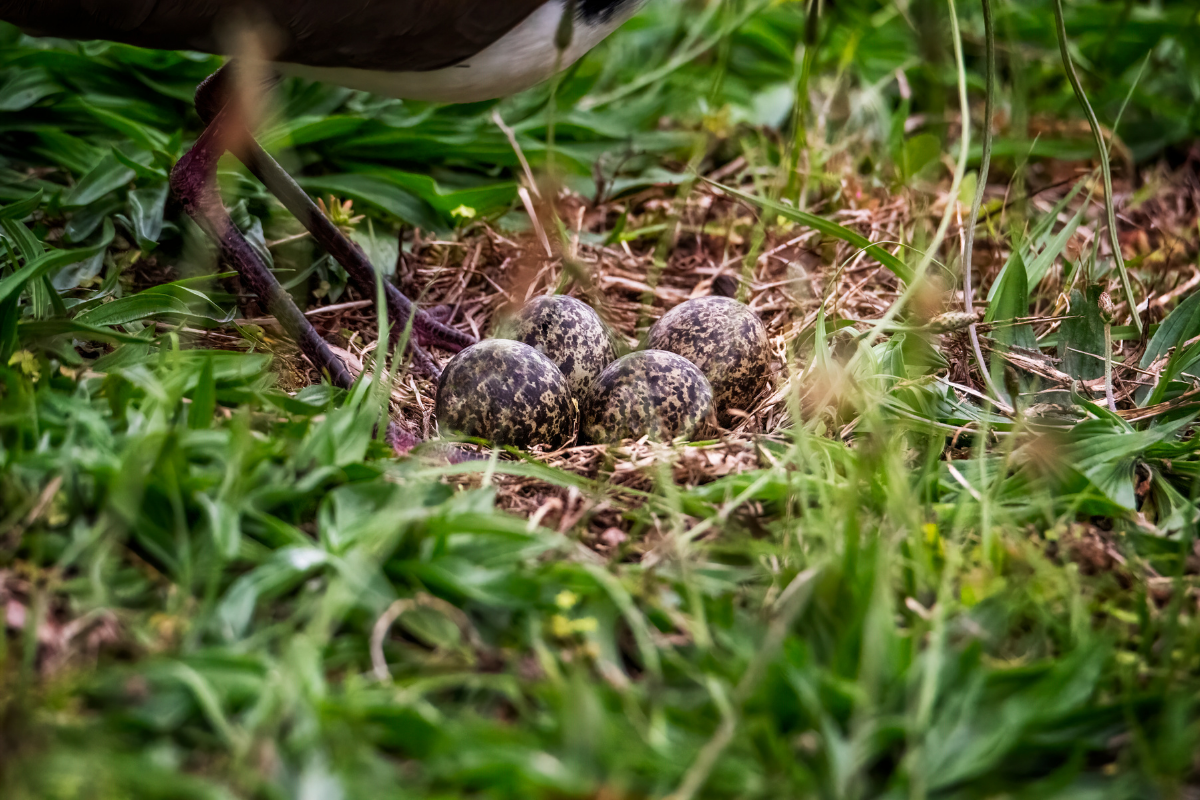
Do not move a plover nest or eggs
If you find a plover nest, do not move the nest, eggs, or chicks simply because they are in an inconvenient location.
Masked Lapwings naturally build simple nests on the ground and may choose locations that seem unsuitable to people, including parks, sports fields and rooftops.
Previous attempts to relocate eggs or nests have resulted in parent birds failing to follow them, which can lead to abandonment. Relocation of native wildlife eggs or nests also requires appropriate authorisation and must be assessed and carried out correctly.
If the nest is in a busy or dangerous location:
-
Keep people and pets away from the nest
- Avoid disturbing the birds
- Use temporary barriers or signage where appropriate to keep people away and create a safe buffer while allowing the birds to continue caring for their young.
- contact WIRES on 1300 094 737 for advice if there is a genuine welfare or safety concern.
Are plovers dangerous?
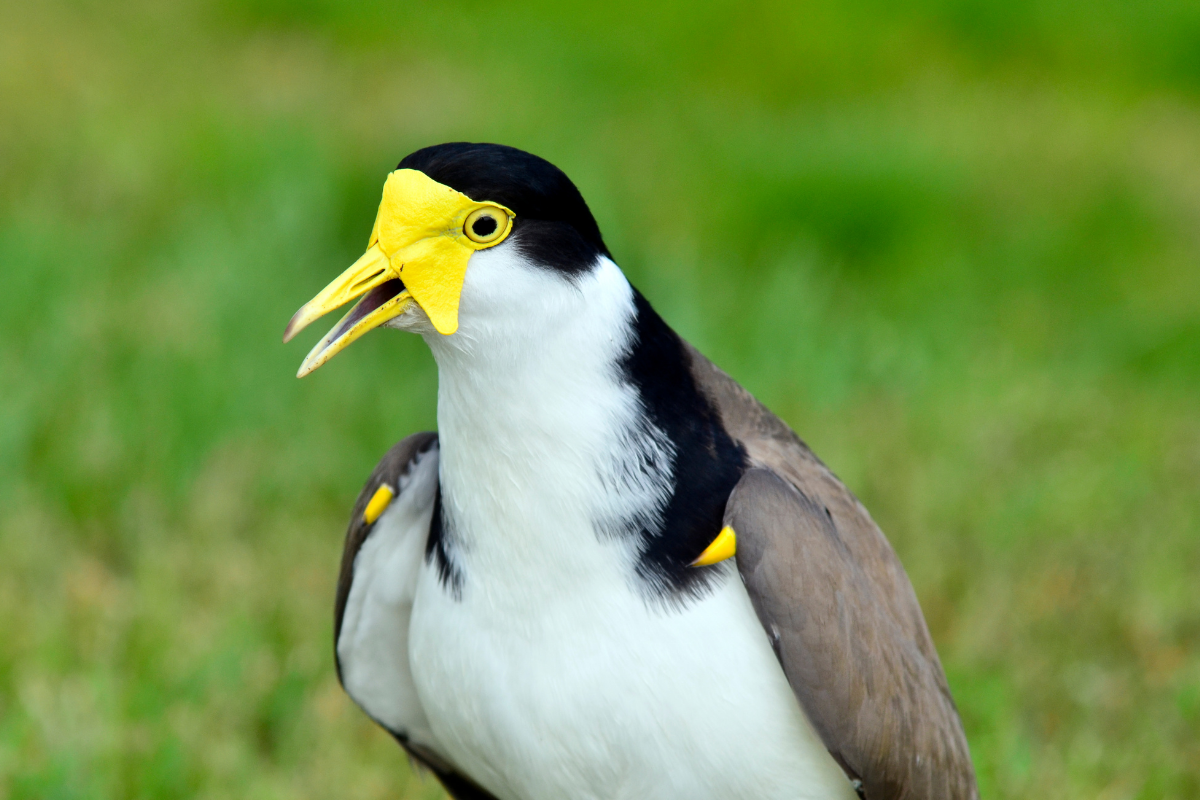
Plovers can look intimidating when they swoop, however, swooping is primarily a defensive display intended to drive a perceived threat away.
Actual contact is uncommon, although a bird can make contact and cause injury. The greatest risk can also come from a person being startled, particularly near roads or while cycling.
Masked Lapwings have a spur on each wing. Despite common misconception, the spurs are not poisonous.
If there are chicks around
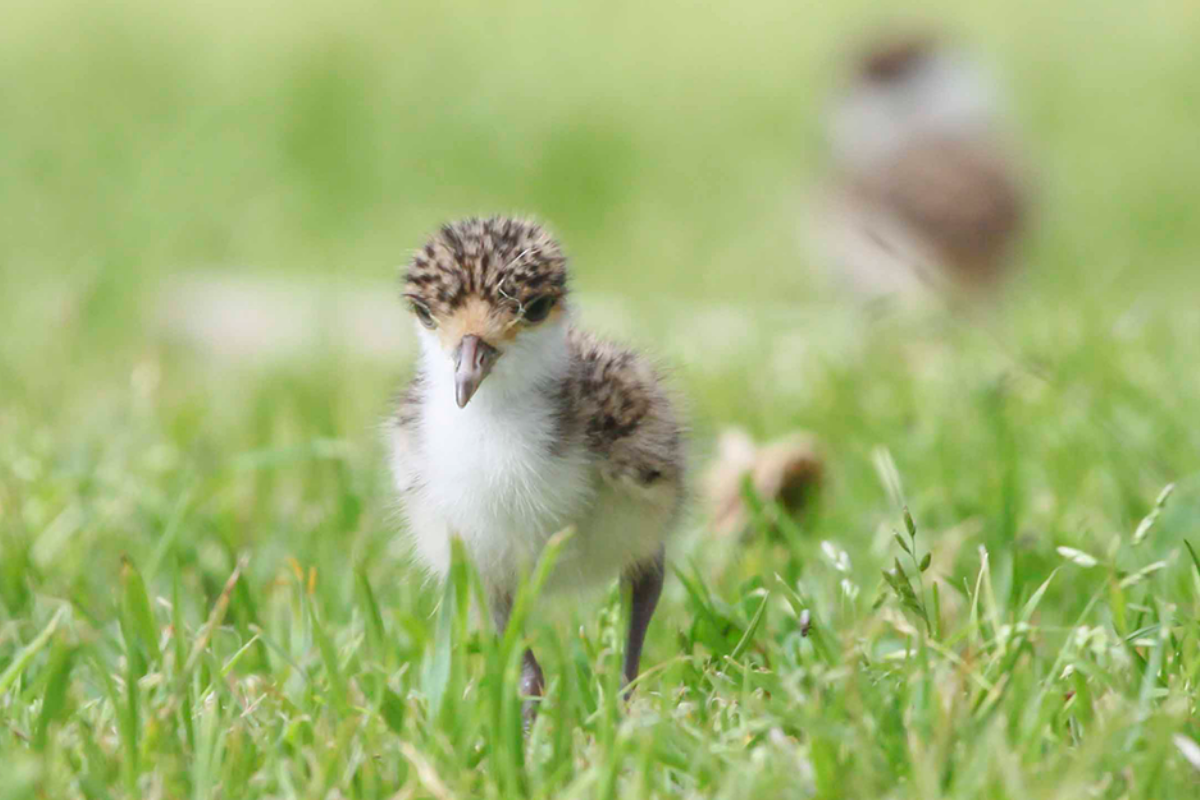
Seeing a plover chick on the ground does not usually mean it has been abandoned.
Masked Lapwing chicks are born covered in down and are able to leave the nest and feed themselves within hours of hatching. Their parents continue to protect, guide and care for them.
Do not pick up a healthy chick simply because it is alone.
If you are concerned about a chick, keep your distance and watch from a safe location. If the chick is injured, trapped, in immediate danger or you believe it cannot be reunited with its parents, contact WIRES for advice.
Plovers are a protected species
Masked Lapwings are native Australian wildlife and are protected. Native birds, their eggs and nests are protected under Australian wildlife laws, with specific requirements varying between states and territories.
This means it is illegal to harm, capture, interfere with or relocate nesting birds, eggs or nests without the appropriate authority.
If you believe a nest genuinely needs to be relocated because of an immediate safety or welfare concern, seek advice from your local council or WIRES, rather than attempting to move it yourself.
FAQs about plovers swooping
Why is a plover swooping me?
Do plovers swoop year-round?
Should I run from a swooping plover?
It is better to stay calm and move away from the nesting area rather than running or behaving aggressively towards the bird.
Can I remove a plover nest?
Can I remove a plover because it is swooping people?
Do plover spurs contain poison?
No, the wing spurs are not poisonous and are no danger to humans. They are used to protect the plovers from predators when they are on the nest.
When to contact WIRES
Contact WIRES if:
- a plover is injured
- a chick is injured or trapped
- a bird is in immediate danger
- a chick cannot safely remain where it is
- you are unsure whether the bird needs assistance
- you have a serious wildlife welfare concern that cannot safely be resolved.
For emergency wildlife rescue support, call WIRES on 1300 094 737, or you can use the Report a Rescue form.
Want to know more about plovers?
Learn about Masked Lapwing identification, their habitat, nesting, eggs, chicks and natural behaviour at Plovers and Masked Lapwings.
If you need help with an injured or distressed plover, call WIRES on 1300 094 737.
15 Ways to Help Wildlife
Sign up to receive our monthly eNewsletter with wildlife rescue stories and updates on our work rescuing, rehabilitating, and releasing native wildlife.
