
swooping
magpies
Magpie swooping tips
Spring is breeding season for Australian magpies, and some birds may swoop to protect their nests, eggs and young. While this behaviour can be alarming, it is temporary and is a natural way for magpies to defend their families.
Most magpies do not swoop. Those that do are not being aggressive for no reason. They are responding to what they see as a threat near their nest.
Understanding why magpies swoop and how to respond safely can help to protect people, pets and wildlife.
To avoid being swooped, here's what to do:
- Stay calm and leave the nesting area
- Walk quickly, don't run
- Wear a hat or use an umbrella if needed
- If cycling, dismount and walk through the area
- Don't wave sticks, throw objects or try to scare the bird. Behaving aggressively may increase the perception of humans as threats
- Respect their warning signals and move further away
- Avoid the area for a few weeks if possible, as swooping usually stops once the chicks leave the nest.
Why do magpies swoop?
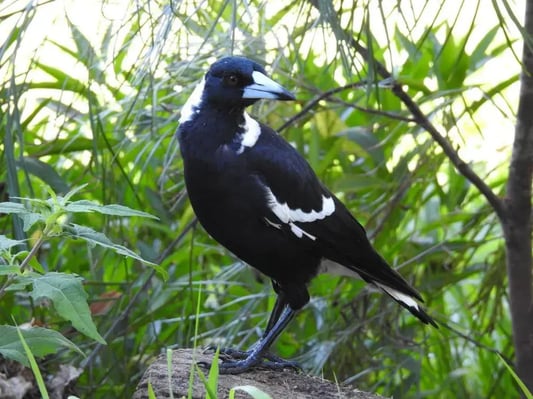
Australian Magpies are intelligent, social birds that form long-lasting pair bonds and keep the same territory year after year. During breeding season, magpies may swoop to defend their nest, eggs or chicks from a perceived threat.
Swooping is a natural defensive behaviour, not random aggression. It usually occurs for a short period of time between August and December, while young birds are in or near the nest. The behaviour usually stops once the chicks have left the nest.
.png "Custom website images (2)")
Understanding magpie behaviour
Magpies have excellent memories and are believed to be able to distinguish between people and so can identify unknown individuals whom they perceive as intruders. If a magpie or its chicks have been frightened or harmed in the past, it may begin to see certain people or actions as a threat. This is why some individuals, such as cyclists or children in school uniforms, may be targeted while others are left alone.
Warning signs to look out for
When magpies defend their nest, they usually give a warning first. If you notice these behaviours, calmly move away from the area.- Loud carolling or repeated calls
- Beak clicking or clapping sounds
- Low warning passes overhead
- Perching nearby and watching you
- Swooping from behind as you pass through the territory.
Respecting these warning signs and leaving the area calmly can help prevent further swooping.
Living alongside magpies
Magpies play an important role in Australia's ecosystems by controlling insects and other pests. Their intelligence, complex family groups and distinctive carolling make them one of Australia's most recognisable native birds.
With patience and a little extra care during breeding season, people and magpies can safely share the same spaces.
FAQs about magpies swooping
Do all magpies swoop?
How long does magpie swooping last?
Can a swooping magpie be removed?
Removing a swooping magpie is not recommended. If a parent is removed, the young may not survive, and another magpie may move into the same territory. Removing a nest can also cause the birds to rebuild nearby and may prolong defensive behaviour.
Magpies are native wildlife and are protected. They must not be harmed, trapped, kept as pets or taken from the wild. If a swooping magpie is causing serious public safety concerns, contact your local council for advice.
What should I do if a magpie swoops my child?
Should I feed a magpie so it stops swooping?
What should I do if I find an injured magpie?
Want to learn more about Australian magpies?
Discover their habitat, diet, family groups, breeding cycle and what to do if you find a young or injured magpie at Australian magpies.
15 Ways to Help Wildlife
Sign up to receive our monthly eNewsletter with wildlife rescue stories and updates on our work rescuing, rehabilitating, and releasing native wildlife.
