
WIRES Hidden Treasures Acknowledged in 2025 Honour Roll
July 2026
Share the story:


.png)
Once Bitten, Twice Shy: A Smarter Way to Protect Australia's Freshwater Turtles
Protecting wildlife doesn’t stop at rescue. It also means investing in innovative solutions that prevent harm before it happens.
WIRES is proud to support the freshwater turtle conservation project “Once Bitten, Twice Shy” through our National Grants Program (NGP). Led by Dr Pizzatto from La Trobe University, and delivered in partnership with WULN, Turtles Albury Wodonga, and local community groups. The project is already delivering remarkable results across Victoria and will conclude In May.
Why this project matters
Freshwater turtles are under serious threat in the Murray River Basin. Introduced predators, particularly foxes, are devastating turtle populations by targeting their nests.
These losses have far-reaching consequences. Freshwater turtles play a critical role in maintaining healthy waterways by recycling nutrients and keeping ecosystems balanced. They also hold deep cultural significance for First Nations communities, connecting people to Country, waterways and long-held ecological knowledge.
Without intervention, local turtle populations face continued decline — and in some areas, potential collapse.
A smart, science-backed solution
Rather than relying solely on physical nest protection, the “Once Bitten, Twice Shy” project is trialing an innovative behavioural approach known as conditioned taste aversion.
In simple terms, foxes are taught to associate turtle eggs with an unpleasant experience. Once they learn this, they actively avoid turtle nests altogether — reducing predation before it happens.
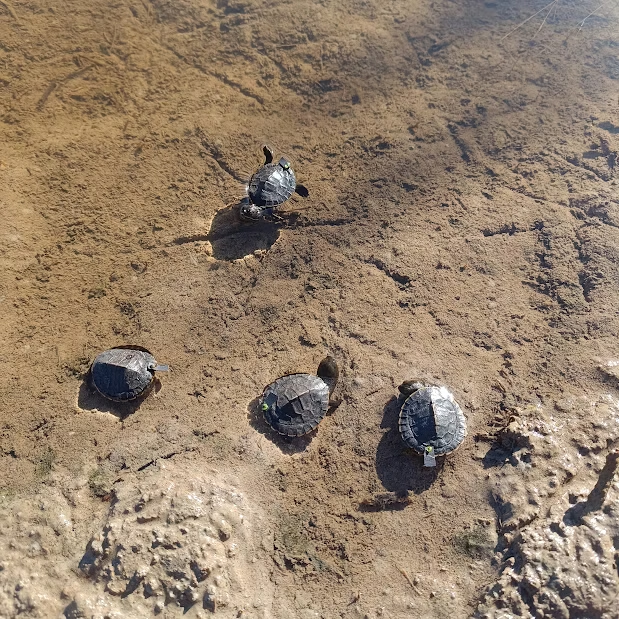
Results that speak for themselves
The early outcomes have been nothing short of impressive:
This means fewer destroyed nests, higher hatchling survival, and a real chance for turtle populations to recover over time.
Empowering communities to protect wildlife
A key strength of this project is its strong community involvement. Local volunteers and citizen scientists are now actively monitoring and protecting turtle nests, helping to build long-term conservation capacity within their communities.
By combining scientific innovation with local knowledge and on-ground action, the project is creating lasting change — not just for turtles, but for the people who care for their local environment.
Supporting wildlife beyond rescue
WIRES’ National Grants Program (NGP) was developed to provide ongoing support for wildlife and their habitats across Australia. The program focuses on:
Together, these initiatives help improve long-term outcomes for Australia’s wildlife and the ecosystems they depend on.
Have a project that could make a difference?
If you’re working on a project aimed at improving outcomes for native wildlife, we’d love to hear from you.
Applications for the 2026 National Grants Program will open soon.
To learn more, visit the WIRES National Grants Program page.
Stay in touch and get our regular rescue stories, WIRES updates and a free copy of our 15 Ways to Help Wildlife ebook
February 2026
February 2026