
WIRES Responds to Alexandra Canal Oil Spill
June 2026
Share the story:


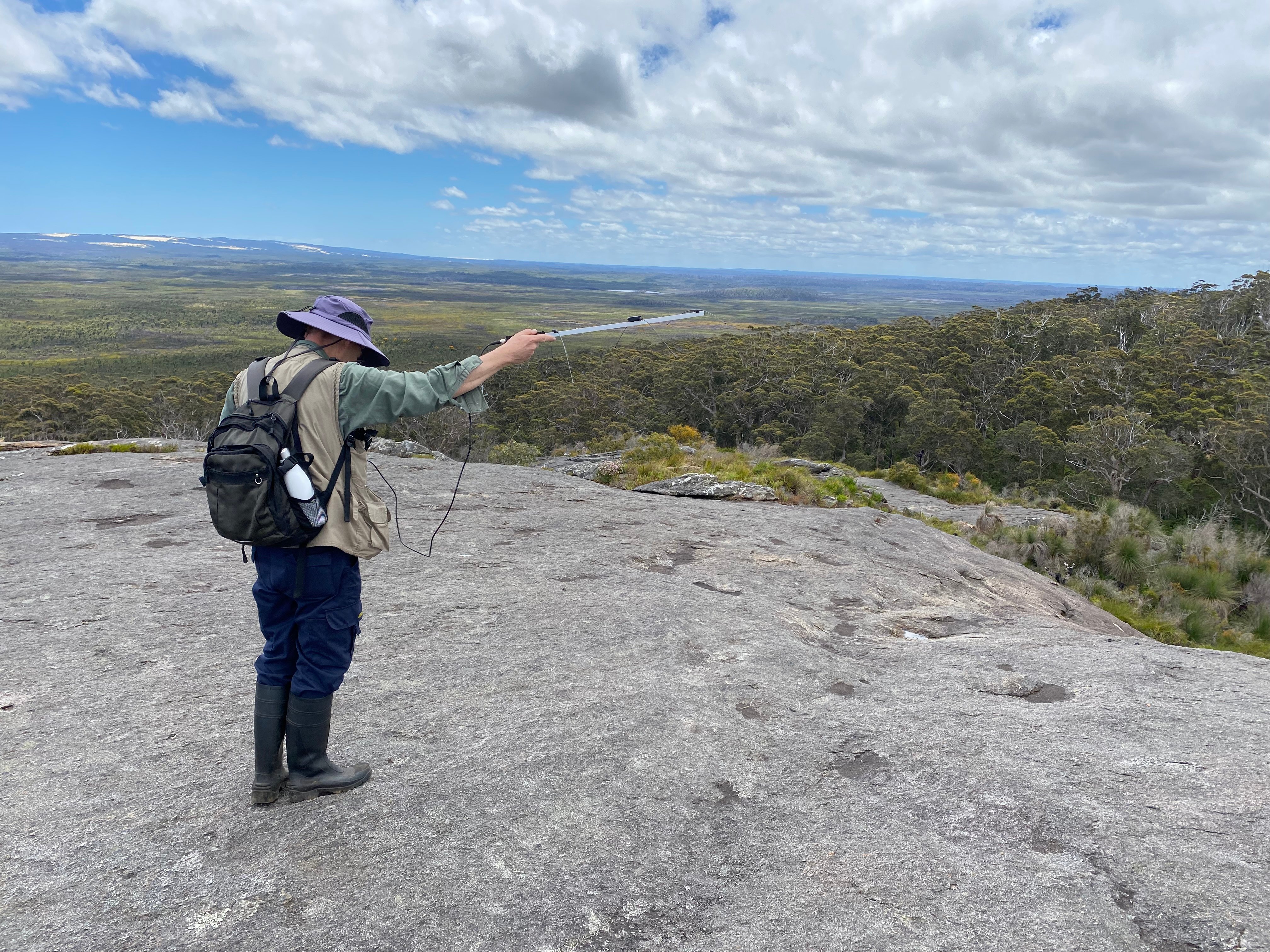
Supporting bats in a warming climate: strengthening conservation in southwest WA.
Bats play a vital but often misunderstood role in Western Australia’s ecosystems, helping to control insect populations and maintain healthy landscapes. Yet many bat species in southwest WA are under increasing pressure from climate change, habitat loss and the decline of mature trees that provide essential roosting sites.
Conservation Council of Western Australia are the recipients of the WIRES 2025 Helen George OAM Mammal Grant of $17,160 to help deliver a comprehensive, on-ground conservation project designed to help bat species adapt to a warming and drying climate, while building the evidence base needed to guide future conservation action.
Understanding where bats live — and why it matters
The project begins with targeted research to better understand how bat species are currently using the landscape. Expert-led surveys and radio-tracking will be undertaken to identify existing roosts, assess roosting behaviour, and determine the habitat features bats rely on for commuting, foraging and shelter.
Tree hollows are particularly critical for many species, yet they are becoming increasingly scarce due to land clearing, fire, and the impacts of climate change on forest structure. Identifying where bats roost now — and what conditions those roosts provide — is essential to developing effective replacement habitat that can support bat populations into the future.
Trialing artificial roosts to replace lost habitat
Once priority areas and species requirements are identified, the project will move into the construction and installation of artificial roosting structures. A range of roost designs will be trialled across different landscapes to test their effectiveness under varying environmental conditions, including higher temperatures and reduced moisture availability.
These artificial roosts will be monitored over the short and long term to assess usage, durability and thermal performance. The findings will help determine which designs offer the greatest resilience under climate stress and can be used as practical tools in future bat conservation programs.
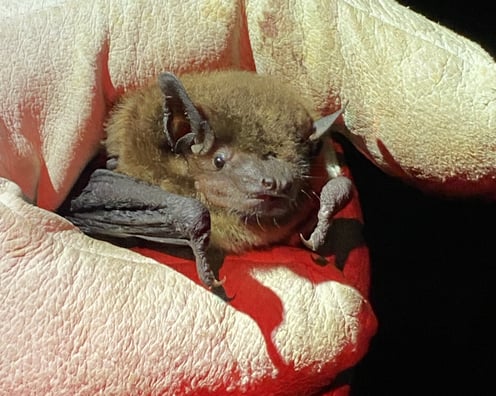
Building a WA Bat Roost Database
A key outcome of the project is the creation of a centralised WA Bat Roost Database. Data collected through surveys, monitoring and citizen science participation will be consolidated to provide a clearer picture of bat roost locations, species use and environmental conditions across southwest WA.
By making this information available, the project will support evidence-based conservation planning, inform species assessments, and help guide habitat protection and management decisions under future climate scenarios.
Community involvement and citizen science
Community engagement is at the heart of the project. Citizen scientists and volunteers will be trained to assist with monitoring, data collection and reporting of bat roost sites. Private landholders will also be engaged to help locate existing roosts and provide access for conservation activities.
Alongside on-ground work, a public education and outreach campaign will address common misconceptions about bats, promote bat-friendly practices, and encourage the community to actively participate in bat conservation. By improving understanding and fostering local stewardship, the project aims to create lasting benefits well beyond the life of the grant.
Informing policy and long-term conservation
This project forms part of a broader program to strengthen bat conservation in Western Australia. By combining research, practical habitat interventions and community participation, it will deliver tangible conservation outcomes while generating high-quality data to inform policy and planning.
As climate change continues to reshape WA’s ecosystems, adaptive, evidence-based approaches are essential. Through this project, the Conservation Council of WA is helping ensure bats — and the ecosystems they support — have a better chance to survive and thrive in a changing climate.
Stay in touch and get our regular rescue stories, WIRES updates and a free copy of our 15 Ways to Help Wildlife ebook
February 2026
February 2026
February 2026
February 2026