
WIRES Invited to Collaborate During Hazard Reduction Burn in Sydney
May 2026
Share the story:


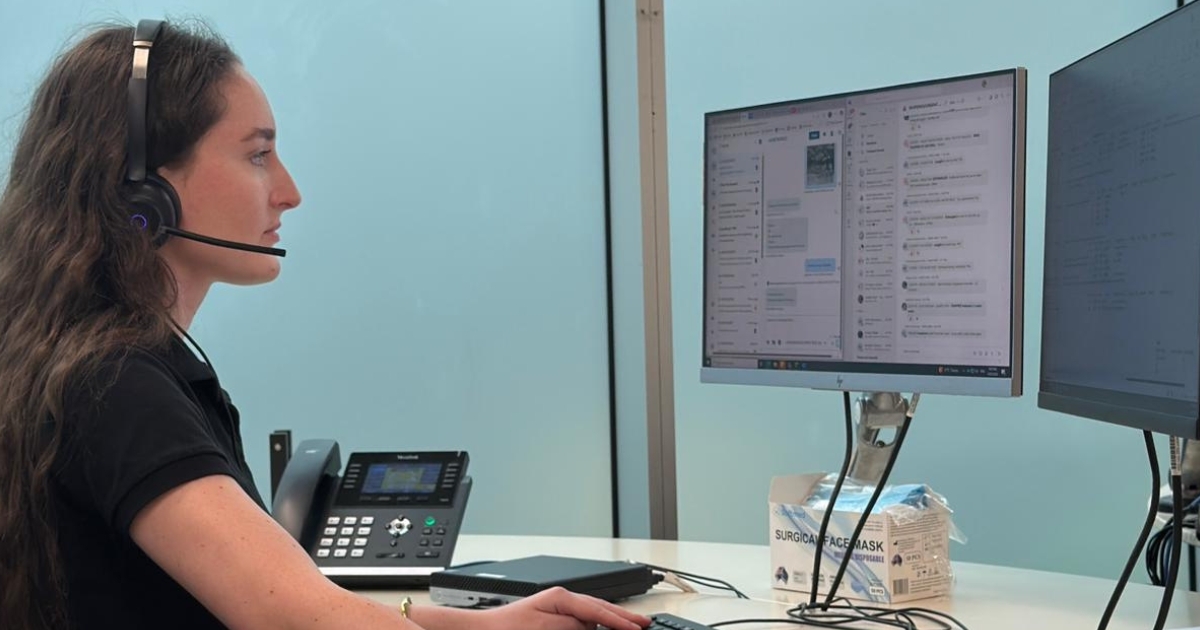
On International Day of Women and Girls in Science, we celebrate the women whose knowledge, curiosity and determination help protect our natural world and native species. Science plays a quiet but powerful role in wildlife rescue every day, from understanding animal behaviour to making the right decisions in urgent moments.
At WIRES, this work is driven by people who care deeply and who bring both heart and science to every rescue.
One of those people is Indiana, a Rescue Coordinator in the WIRES WRO office and a recent graduate in Biodiversity and Conservation. From taking emergency calls to coordinating care with volunteers, carers and vets, Indiana helps ensure native animals get the best possible chance when they need help most.
WIRES sat down with Indiana to discuss her journey into science, her volunteering background and her strong desire to make a real difference for animals.
Could you provide a brief outline of your current role?
I work as a Rescue Coordinator in the WIRES Rescue Office (WRO). Alongside an amazing team, I help coordinate the rescue of animals to carers and vets. From the intake of initial calls, to helping resolve complex and urgent rescues with the volunteers and our WIRES emergency team.
What motivated you to choose this career or research path?
My passion for wildlife conservation began when I was younger, rescuing kangaroos with my family through Old Wildlife Aid. I was further inspired through high school work experience at Taronga and subsequent opportunities with other zoos, sanctuaries, and veterinary practices. Because of those early experiences, I became a volunteer carer with Hunter Wildlife Rescue; where I continued to rehabilitate and release possums, macropods, birds, and reptiles.
Growing up inspired by conservationists such as Jane Goodall and David Attenborough, I have always aspired to make a meaningful and active contribution to animal research and conservation. Pursuing a degree in biodiversity and conservation has been a key step in helping me do this, supported by my work at WIRES.
What advice would you give to other women and girls wanting to follow a career in science?
Pursue every opportunity with passion and a readiness to challenge yourself. I encourage you to apply for roles or volunteer positions even if you don’t feel qualified; there’s no harm in trying and these experiences often lead to new connections and skills.
Asking questions and gaining practical experience are important to getting work with animals or in ecological sciences. Conservation and science can be a challenging but deeply rewarding career - where passion, persistence, and curiosity are essential.
Indiana’s story is just one example of the many women who power wildlife rescue and conservation every day. Across WIRES, women work as carers, rescue coordinators, educators, researchers and volunteers, applying scientific understanding alongside care, patience and determination to give native animals a second chance.
This International Day of Women and Girls in Science, we’re also shining a spotlight on two WIRES volunteers, Claire who has studied for ten years in the areas of Ecology, Evolutionary and Conservation Biology, and Samantha who is currently doing her PhD on the impacts of extreme heat on Australian flying-foxes. For both of them, rescue and science aren’t separate worlds, but parts of the same purpose: understanding wildlife deeply enough to protect it better.
People often picture wildlife rescue as the moment an animal is carefully put into a carrier or returned to the wild. Less visible is the science that makes those outcomes possible, and the research working to prevent harm in the first place.
For WIRES volunteer Claire, that connection is hands-on every day.
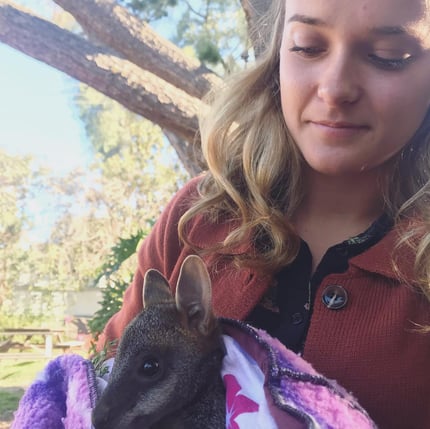
Claire has spent more than 11 years volunteering with WIRES as a wildlife rescuer and carer, and since 2021 has served as her branch’s Reptile and Amphibian Coordinator, a role requiring specialised knowledge, careful observation, and patience. Reptiles and amphibians can deteriorate quickly, and their care depends on understanding temperature regulation, hydration balance and stress physiology. Every decision is grounded in biology.
Her professional life mirrors that same commitment. As a Project Coordinator with Taronga Conservation Society Australia, Claire helps deliver and improve a national training program teaching veterinarians and nurses how to triage and treat injured native wildlife. Each trained professional expands the safety net for wild animals across Australia.
Claire’s path into conservation has taken her through behavioural biology research, ecological consulting and education roles. She is also a published scientist on animal communication, reptile display behaviour and conservation breeding programs, research that deepens our understanding of how species survive and adapt.
Her work shows how science guides rescue in the moment.
For Samantha, science helps explain why rescues happen at all.
.jpg?width=338&height=450&name=Image%20(15).jpg)
Wildlife conservation often begins with a simple question: why is this happening? For WIRES volunteer Samantha, that question has shaped a scientific journey focused on one of Australia’s most ecologically important (and vulnerable) mammals: flying-foxes.
Samantha completed a Bachelor of Science at Western Sydney University. Later, during her Master of Research, she studied the drivers behind flying-fox urbanisation, exploring why these highly mobile animals increasingly roost near people.
Today, her PhD research examines how extreme heat events affect Australian flying-foxes, a growing conservation concern as climate change increases the frequency and severity of heatwaves. Flying-foxes roost exposed in tree canopies during the day, and once temperatures exceed around 42°C their natural cooling behaviours begin to fail.
Mortality events can involve tens of thousands of animals at a time, with dependent young and mothers particularly vulnerable.
Her work aims to build the scientific foundation needed to protect them. By studying roost microclimates, species-specific sensitivities and long-term population impacts, Samantha’s research seeks practical solutions, including whether modifying roost environments could reduce heat stress during extreme weather.
The stakes are high. Flying-foxes are major pollinators and long-distance seed dispersers, supporting the health and genetic diversity of forests across Australia. Understanding how they respond to extreme heat is essential not only for the species themselves, but for entire ecosystems.
Together, Claire and Samantha represent two sides of the same conservation story, responding to wildlife in crisis, and working to prevent those crises from happening.
On the International Day of Women and Girls in Science, we celebrate women whose knowledge turns compassion into action, and evidence into protection for wildlife.
Stay in touch and get our regular rescue stories, WIRES updates and a free copy of our 15 Ways to Help Wildlife ebook
February 2026
February 2026
February 2026
February 2026
January 2026